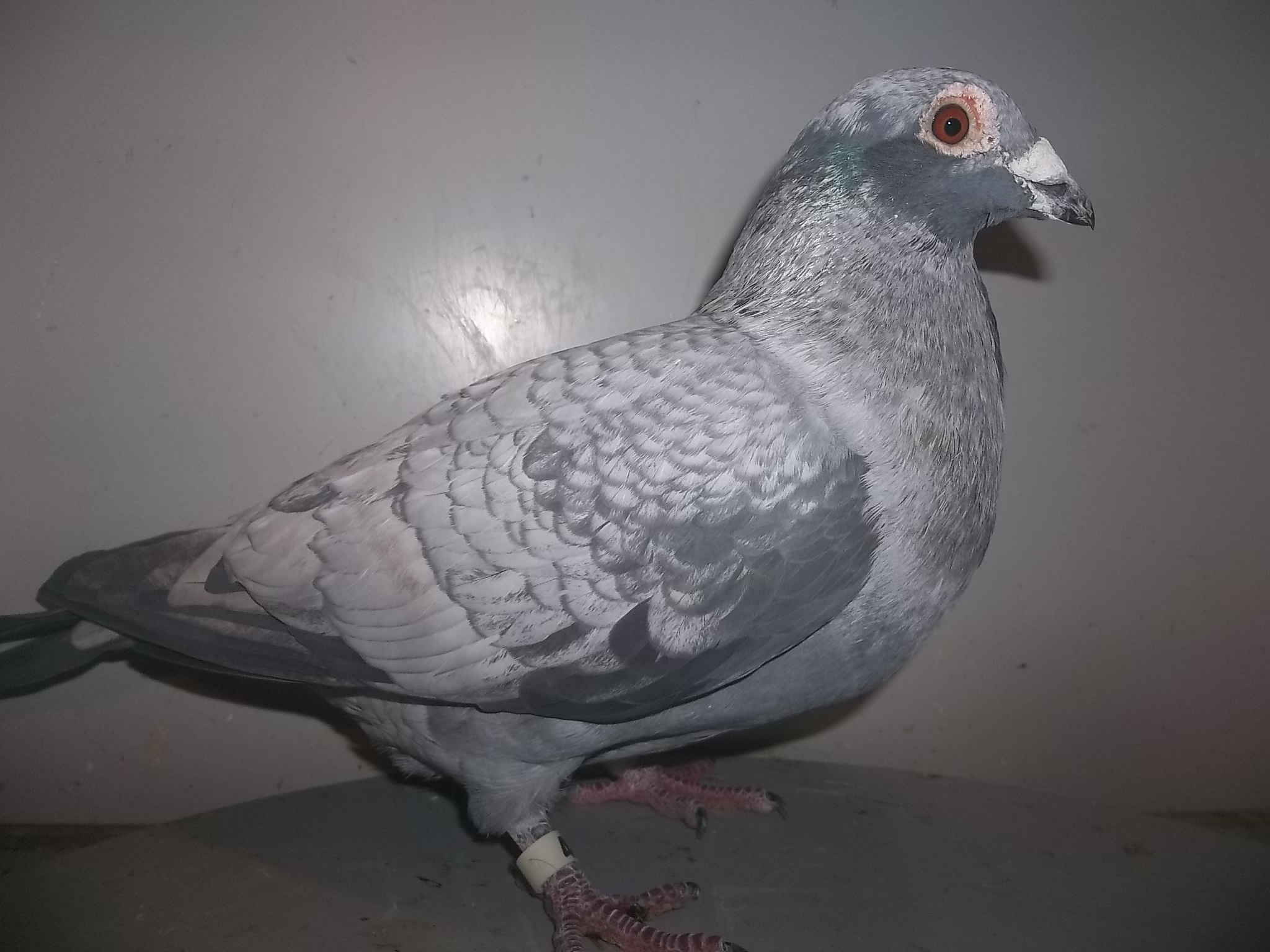
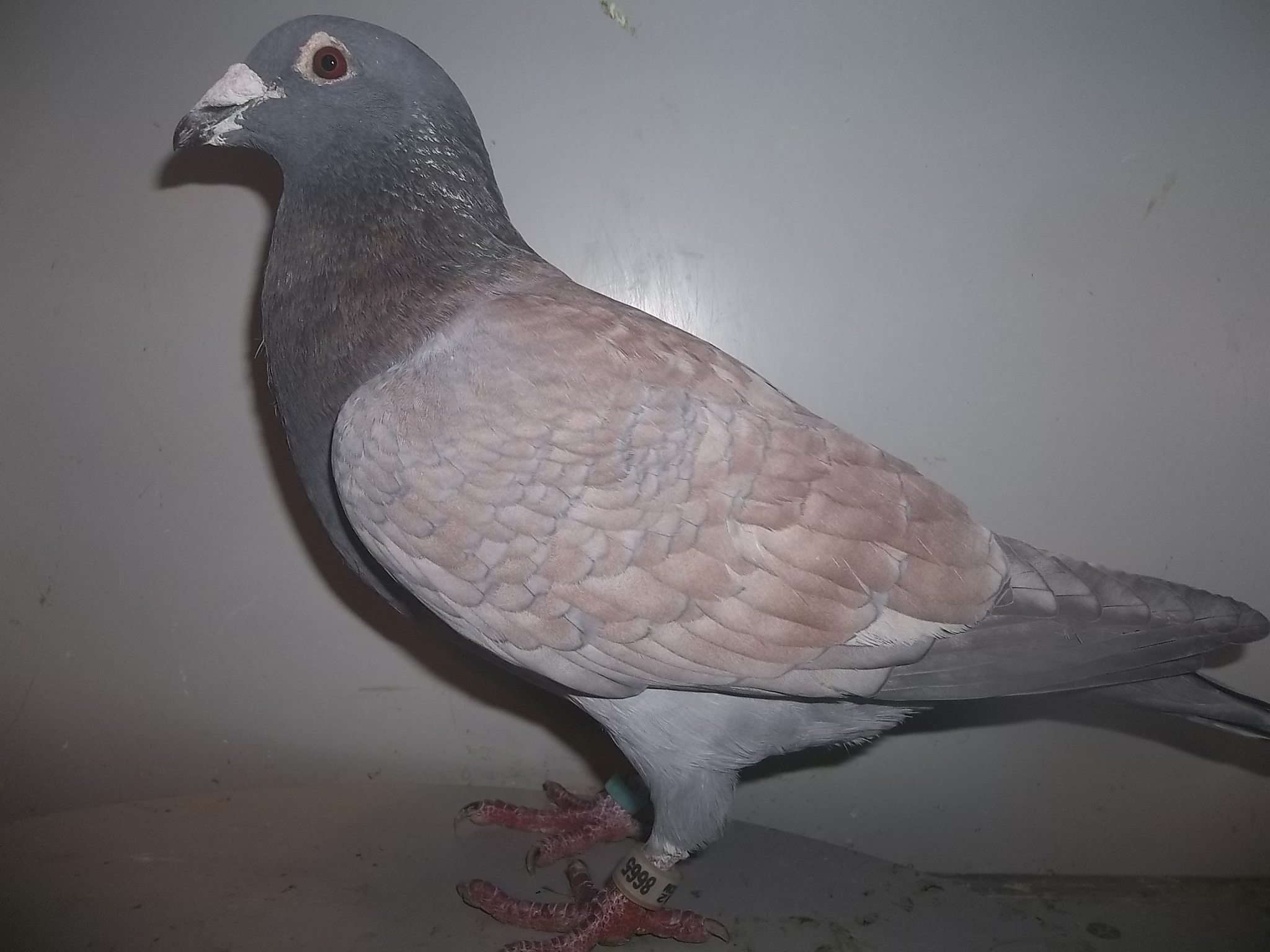
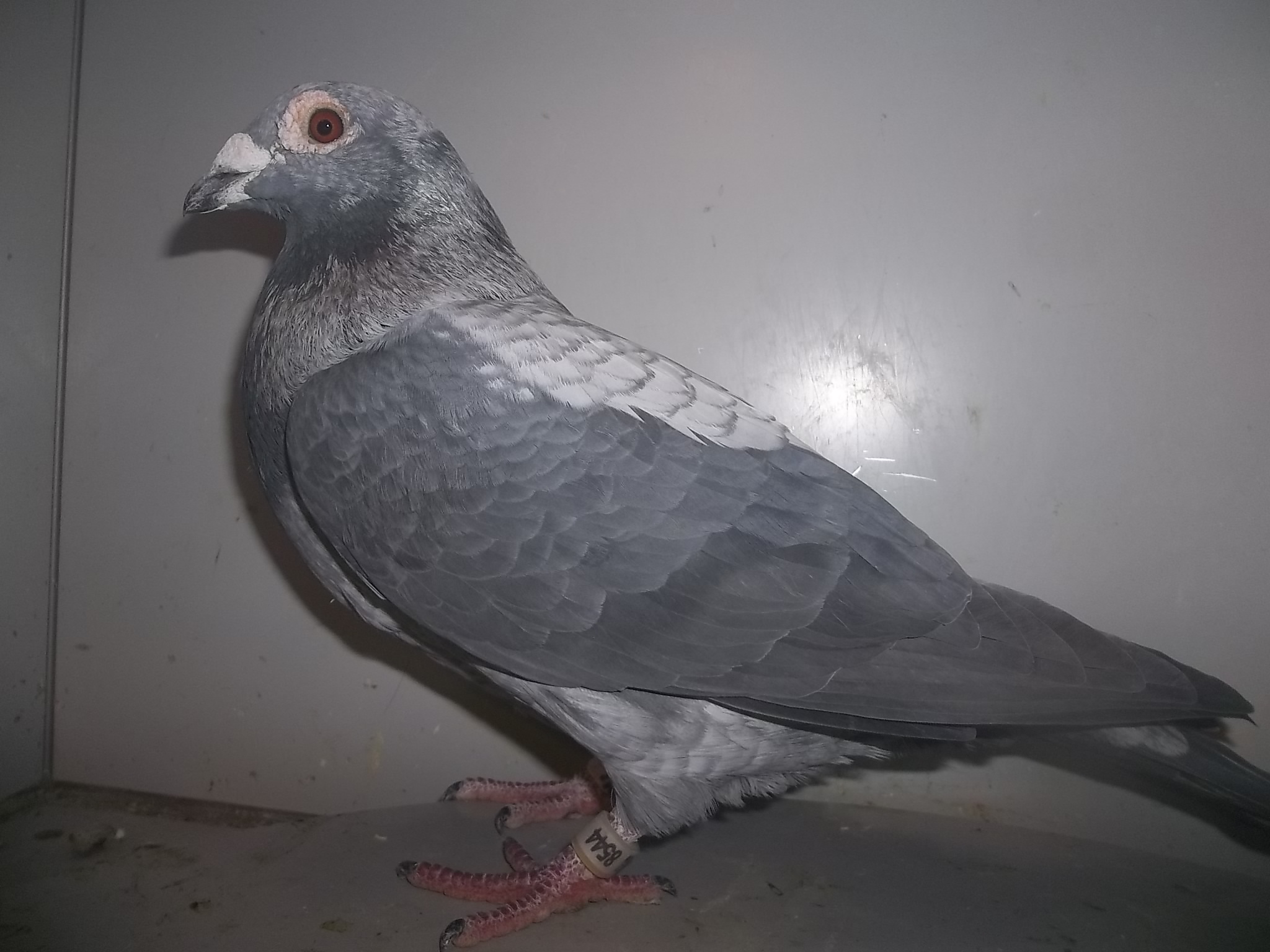
Below is the show standard for the "Show Type Racers" or what some refer to as "Un-Flown Homers" . They are a docile breed that derives originally from racing stock (Greenshield line of racers), but have been bred for many generations for thier show quality over thier racing ability. Even though they may pocess some homing ability,
they by no means are racing calibre stock.
Head: Head should be neither to long or too short, but complete proportion to
the rest of the bird. The head should be round with no cornering. The line of
the head beginning at the top of the wattle should follow back to the top of
the head in a slight curve. This slight curve should in no way be too prominent
or exaggerated. This line should show a strong back skull. A hen may have a
slight break in the curvature of the foreskull as denotes her sex. A hen should
have a strongh feminnine facial expression: hence she be recognized as a a hen
at a glance.
Beak & Wattle: Beak should be sraighnt and well set. Upper and lower
manidible should fit tightly together, with upper mandible capping lower
mandible with no presence of a hook. The wattle should eb clean and white and
"V" shaped, with a smooth , even texture. The wattle should not rise
above the of the foreskull, but should be in line with it. There should be no
feathering between the two halves of the upper mandible. The two halves of teh
upper mandible will be split by a small crack or narrow opening, but this split
should not be exaggerated or show through to the upper beak.
Eye & Eye Cere: The eye should be positioned with the eye centered in the
sie of the head. The eye should appear bright and rich in color; however there
is no particular color desireable over the entire spectrum of colors. The eye
should not be broken or cracked or otherwise defective in any way. The eye cere
should be refined, not exaggerated or rough. The color of the cere and the cere
itself should be a blend with the head.
Neck: Medium to short in length, no gullet, frill or creases. Should taper
evenly to the back, shoulders and breast.
Breast: The breast shoudl be smooth feathered. Should be in proportion to the
rest of the body and curve nicely to meet the keel.
Back & Rump: The back should be broad and flat at teh shoulders. From the
shoulders to the rump the back should be straight and without hump or
hollowness. the rump should be broad and full with no loss of firmnessat the
base of the tail. Feathers at rear or rump, both top and bottom, should form
good cushion to cover base of tail.
Tail: The tail should have twelve feathers, but should not give the appearance
of one feather. The tail should not appear too long or feel as though it's
not strongly attached to teh body. The tail should feel as though it's a
continuation of teh body and not a separate part. As you run your thumb and
index finger over the tail, they should never touch or come within 1/8 inch of
one another. There shoudl be a feeling of thickness, of substance. If there
isn't, the tail is lacking.
Keel & Vents: There is no standard length to the keel; however we geel that
the keel should be no further than one finger width from the center of the vent
bones. Any more than one finger's width between keel and vents is most
undesireable and is a serious fault. The keel should taper slowly to the vent
bones. There should be no feeling of the keel dropping off. The keel must meet
the vent bones and not drop below or curve above the vent bones. The keel
should not have a sharp, cuting feel to it. The keel should be free from waves,
nicks, indentations and crookedness. Unless these faults are exaggerated they
will be considered as just faults and will not disqualify the bird. The vent
bones themselves should be as close together as possible, but not touch each
other. The vent bones should be resistant to the touch and of even length. The
vent bones must blend into the rest of the body. Depth of the keel should not
exceed more than 1/2 inch of the outward contour of the closed wing by
appearance.
Body: The body should be round, firm and have a feeling of suppleness. The
pectoral muscles should be evenly distributed and balanced on both sides of the
keel.When holding bird in hand there should be no prominent feeling of the keel.
Muscle and keel should belend together to feel as one. The body must fit the
hand nicely, with a smooth, tapering from the breast to the tip of the tail. A
sharp wedge shape isn't
desired. The bird should feel buoyant while held in teh hand. There should be
no suggestions of dead weight, but only of firmness and substance.
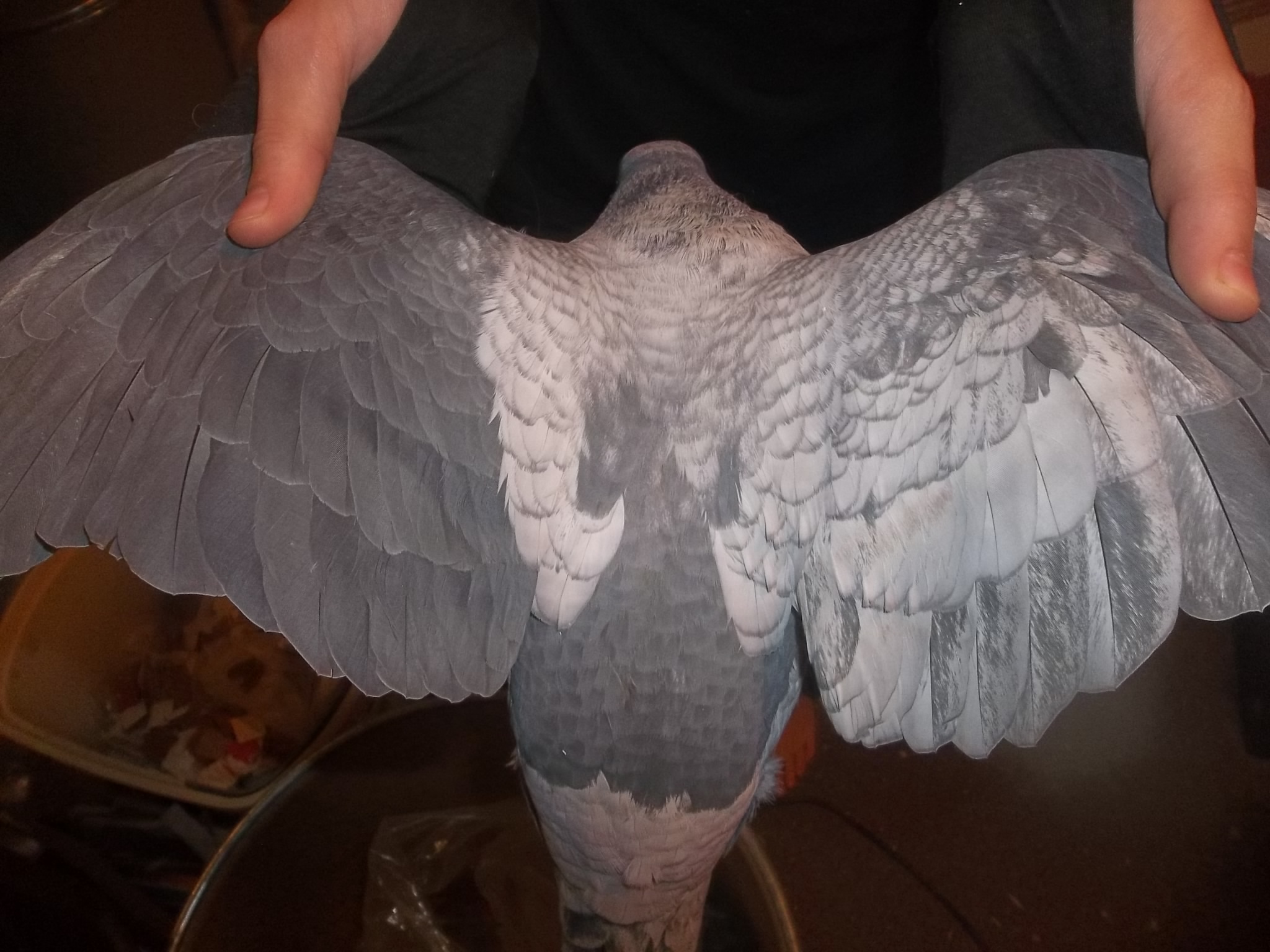
Wings:The wing of the bird should contain ten primary flights. teh flights
should be broad and strong, yet flexibleand without flaw. Tips should be free
of ripples or waves. Wing butts should be thick and held tight to body. The
wings must be held above the tail. Width of the wing should cover most of the
thigh. The bottom perimeter of the wing should run parallel to the keel of the
pigeon. The wing coverts and secondary flights should meet over the back and
well down the rump. There should be no "side-boarding" or
"tunneling". The secondaries should touch teh back as they cover it
and not lie above the back, forming a tunnel.
Legs, Hocks & Toenails: The legs of the bird must appear to be short medium
in length, but preferably on the short side. The feathering on the thighs should
blend nicely into the rest of the body. there should be no feathering below teh
top of the band. The legs should be bent at a 45 degree angle. Stretching of
legs is a fault. Toenails shouldn't exceed three eights inches in length.
Feathering: Feathering should be rich and silky and tight to body. Devoid of
lines, frills or turned up feathering. Fret marks are faults, but unless they
are exaggerated, not disqualification. Mite holes or lice are a
disqualification. A slight tear or bend in the feathering is a fault, but not a
disqualification.
Stance: Overall appearance of teh bird should be well balanced in proportion to
it's size. Bird should stand at a 45 degree angle from floor. The tail of
both cocks and hens should either touch the floor or come to less than one inch
of the floor. Both sexes must be well balanced and show good conformation.
Overall apearance of bird should not appear to be stretching. Head should not
be stretched forward or backward.